Want to create a personal blog?
Then this post will unravel the mystery behind personal blogging in the most comprehensive and result-driven manner possible.
So, first things first, what is a Personal Blog and why do you need it?
What is a Personal Blog?
A personal blog is a platform where individuals share their thoughts, experiences, or passions on a variety of topics, typically in a conversational and informal tone.
Unlike business or professional blogs, personal blogs focus on the blogger’s personal insights rather than promoting a product or service.
Personal blog meaning extends to a space for self-expression, storytelling, or documenting life events. A personal blogger, meaning refers to someone who regularly publishes such content, often using their unique voice to connect with an audience.
Why Write a Personal Blog?
There are many reasons why people write personal blogs.
Personal blogs can be used as a diary, a way to keep friends and family updated on your life, or a platform to share your interests and thoughts with the world.
Personal blogs can also be used as a way to build an online following and create a community around your interests.
What are the Benefits of a Personal Blog?
Every person who wishes to convey a message to someone has to make sure to choose the right medium first.
With most of the population shifting their preference to technology, the mediums for sharing information have also changed to a great extent. Thus, the meaning of a personal blog goes far beyond just expressing a singular opinion.
No one could have thought that the internet could become an essential part of marketing, but it did.
No one could have imagined that the Internet could also act as a medium for expressing thoughts, but it has undoubtedly become one and that too the fastest-growing and the most famous one.
Personal Blogs have evolved as a great medium for sharing information or even expressing thoughts online.
A personal blog is a sort of blog that has grown gradually over the span of years. A blog is simply a sort of website that mainly focuses on written content.
Personal blogs have gained a lot of popularity over time and have become a great source of sharing experiences, feelings, thoughts, or even knowledge about anything and everything.
Around 53% of the marketers consider blogging as their top Content Marketing Type claims HubSpot.
There is no hard rule as to how to create a personal blog.
Personal bloggers today tend to follow the same trajectory as in older times, even though there is no fight to creating a website.
To create a personal blog, budding bloggers can use many blogging networks and start sharing their blogs with the world.
The main success of a personal blog lies in finding others to share the writing.
The best way out could be to find people who share common interests with you.
As a blogger begins to grow in connection with other bloggers, the personal blog eventually begins to grow too.
Read on to find out how you can easily start a blog:
Steps to Create a Personal Blog
Step 1: Choose Your Blogging Platform
Before you write a single word, your most important decision is where your blog will live.
This choice impacts your cost, your control, and the technical skill required. Here are the three main options, explained.
Option 1: All-in-One Website Builders (The Easiest Start)
Who it’s for: This is for the true beginner who prioritises ease of use and speed. If you want a beautiful, functional blog up and running in a few hours with no technical stress, this is the fastest, easiest setup.
Examples: Wix, Squarespace
What it is: These are services that bundle everything together: your hosting, domain (usually free for the first year), themes, and a drag-and-drop website editor.
Pros: By far the easiest and fastest way to get started. No technical skills are needed, and you get professional-looking results in hours.
Cons: Less flexible than self-hosted options, and it can be difficult to move your blog to another platform later.
Option 2: Hosted Blogging Platforms (The Free/Cheap Start)
Who it’s for: This is for the hobbyist or casual blogger who just wants to test the waters for free. It’s a good way to see if you enjoy writing, but not for building a serious brand.
Examples: WordPress.com, Blogger
What it is: These are free (or very cheap) platforms designed purely for blogging. You can sign up and start writing in minutes.
Pros: It’s free and simple to start writing.
Cons: You have very limited control. Your URL will be yourname.wordpress.com, you can’t install custom plugins or themes, and you are restricted in how you can make money.
Option 3: Self-Hosted Platforms (The Professional Choice)
Who it’s for: This is for the serious blogger, aspiring entrepreneur, or anyone who wants to build a long-term asset. If you want total control and plan to turn your blog into a business, self-hosted WordPress is the way to go.
Examples: WordPress.org (This is the method your guide already covers)
What it is: This is when you buy your own hosting (from a company like BlueHost, as you mentioned) and install the free WordPress.org software.
Pros: You have 100% control over everything: your design, your content, and every dollar you make. You can install any of the 50,000+ WordPress plugins to add new features.
Cons: It has a steeper learning curve. You are responsible for your own security, backups, and finding a hosting provider.
Our Recommendation for Beginners
If you want total control and plan to turn your blog into a business, self-hosted WordPress is the way to go. If you want the fastest, easiest setup, use a website builder.
If you’re wondering how to start a personal blog, following a few simple steps can help you launch your blog and share your ideas with the world effectively.
How to Set Up Your Blog (Step-by-Step)
The main and foremost step starts with making the blog accessible to people around the world.
This way, you can surely widen the reach of our blog and reach out to the audience from across the globe. This requires two main things primarily namely Hosting and Domain.
Hosting
This is the powerhouse of your site.
Even though you might not be able to see it but still every website on the internet has a host providing service and, most importantly, the power to it.
To keep it simple and practical, a hosting service is the one that is actually responsible for connecting your website to the internet. If a hosting service and a hosting provider are absent, surely it would lead to no connection of the website with the internet.
Domain
A domain is practically your permanent address.
You should try and get a unique domain name that is engaging and attracts the audience. Many websites today provide free domains, but that is just the case for newbies.
If you are planning to create a big online presence, it becomes a sort of necessity to have your own domains, as it goes a long way in building trust among the users and giving your website a unique identity of its own.
You can surely choose to build your website from scratch at any time, but that simply implies that you’ll have to spend a great deal of time coding, and then even after putting in maximum efforts, the result might come out mediocre, which can be surely disappointing.
So, in case you don’t fancy the idea of toiling and playing around with the codes and the complex language, you can simply adjust your attention and focus to turn to the specialist available at your disposal online.
You can easily start with the purchase of your hosting and domain at the same time.
Choosing a Hosting Plan
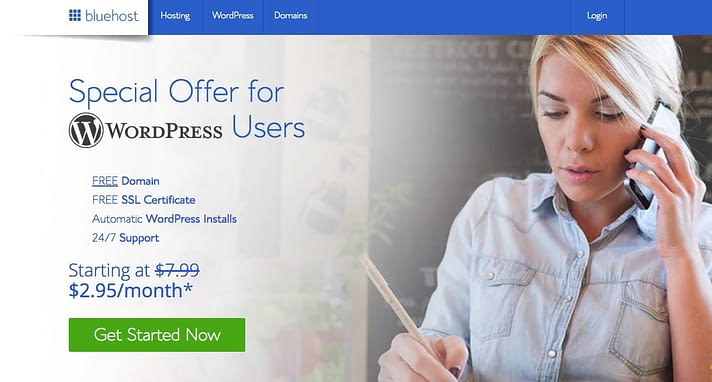
You may choose to go for different options available at your disposal, but you can choose WordPress Blog, and it is widely recommended to use BlueHost for new WordPress bloggers.
Some of the reasons justifying this choice and move are as follows;
(i) Budget is something that gives enough goosebumps to big giant names online, let alone the newbie startups and bloggers. To eradicate this thought from the context, many websites are available for aid.
Hosting services and domains are easily available at a very reasonable price, which is a great fact for all the budding bloggers out there trying to make their mark amidst the cutthroat competition.
(ii) You are even eligible for a free domain name when you sign up, and this directly ties in with affordability, as a domain otherwise would easily cost around $10+.
The amount in some cases might seem less, but it is eventually on the final payment that you realise that the iceberg is just a small part of the glacier.
(iii) You seriously require zero stints with technical knowledge, as you can install wordless software easily within a few clicks and start using it.
This eliminates the fear of having high technical knowledge, which is widely prevalent among budding bloggers.
Having said that, you can always choose to get into the production mode of the website traditionally, but it’s surely your choice for the simple fact that it’s your website and, most importantly, your blog.
(iv) Success surely can’t be achieved overnight, and keeping this in view, BlueHost offers plenty of performance to keep your site loading.
Being a new blogger, one can be easily carried away by the slams online or simply in the stress of managing the workload and being behind the wheel of the whole process.
(v) You can easily sign up for WordPress hosting at BlueHost. This surely might come across as a daunting task but it is only when you start getting hold of it that you realize that you can realize how easily you can create a personal blog.
Install Your WordPress Software
Unsurprisingly, you will have to install the software.
For instance, if you are creating a WordPress blog, you will be required to install the software of WordPress.
This again might come across as a little intimidating, but most people are surprised to know how easy it actually is to install the software.
After completing the signup part, you receive an email from BlueHost.
The email aims to facilitate your experience of logging in to the BlueHost customer area.
A simple wizard is available at your disposal once you are done logging in for the first time.
The wizard takes you through the process of installing WordPress on your brand-new site.
Using the easy navigation and the menu available, you can launch the Wizard all by yourself and that too pretty easily.
Once you are done with the installation process, you will finally have access to the dashboard of your new blog.
Having access to the dashboard and that too so easily can surely turn up the mood of the users, and this again marks a great start for their own personal blog.
Step 3: Develop Your Blog’s Brand
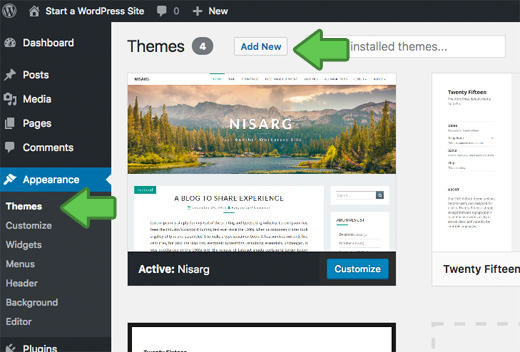
Your blog isn’t just a collection of articles; it’s a brand. A strong brand makes you memorable and builds trust. This goes far beyond just your theme.
Define Your Niche
You can’t be everything to everyone. Your niche is your blog’s central topic and who you’re writing for. Are you a travel blogger focusing on luxury hotels? A food blogger for 30-minute vegan meals? Get specific. This helps you attract the right audience that will come back again and again.
(Your existing “Popular niches” list fits perfectly here.)
Choose Your Blog’s Look and Feel
This is where your theme, colours, and fonts come in. Your design should match your topic. A personal finance blog might use clean, professional colours (like blues and greens), while a travel blog might be more vibrant and image-heavy. Your top priorities should be a design that is clean, easy to read, and fully responsive on mobile devices.
Create a Simple Logo
You don’t need to hire a designer. Use a free tool like Canva to create a simple text-based logo. This adds a professional touch to your blog’s header and can be used to create a consistent brand on your social media profiles.
Add Functionality to your Personal Blog
While the look of your personal blog does matter and is going to induce visitors, you have to pay proper attention to the plugins.
Plugins are mainly focused on facilitating the functionality of your personal blog.
There is no denying the fact that when you create your personal blog with WordPress, you can write blog posts and create pages.
You can easily add more functionality with the aid of plugins.
Some of the advanced functionalities that you can add using plugins are:
(i) Contact Forms
(ii) Backups
(iii) Improved Search Engine Optimization
(iv) Social network buttons
Naming these functionalities doesn’t imply that only these are available at your disposal.
It won’t be wrong to state that you have a plugin available for nearly every function that comes across in mind. Many might question how to install plugins for your personal blog.
Don’t worry!
You are covered (not in the literal sense). Jokes apart, below are the quick version steps that you can follow to add plugins to your personal blog;
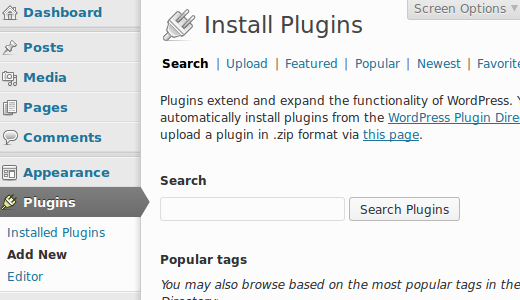
(i) You simply have to go to Plugins and then click on Add New (if it wasn’t obvious)
(ii) If you choose to go ahead with a free plugin available at WordPress, you just have to type the name of the plugin you wish to install for your personal blog and install it
(iii) If you purchase a plugin, you have to click on the Upload Plugin button and then upload the ZIP file you received when the plugin was eventually purchased for your personal blog.
(iv) This might come across as a very simple and obvious step, but you still have to make sure that you activate the plugin after you have installed it. The plugins tab allows you to manage the plugins for your personal blog very easily.
Step 4: Plan Your Content Strategy
A successful blog doesn’t just happen; it’s built on a foundation of consistent, valuable content. Don’t just write when you feel inspired; create a plan.
How to Brainstorm Blog Post Ideas
Think about your target audience. What problems do they have? What questions are they Googling? Keep a running list of ideas so you never face a blank page.
- Use Google’s “People also ask” box for ideas.
- Think about the top 10 questions you get asked about your topic.
- What do you wish you knew when you first started? Write that.
Create an Editorial Calendar
An editorial calendar is a simple schedule (it can be a spreadsheet or a Google Calendar) of what you will publish and when. This keeps you accountable. Aim for a realistic schedule—whether it’s once a week or twice a month, consistency is more important than frequency.
15 Personal Blog Post Ideas to Get You Started
- Busting a common myth in your industry.
- Your personal story: Why did you start this blog?
- A “how-to” guide on a skill you have.
- A review of a product, book, or movie you love (or hate).
- Your top 5 tips for… [related to your niche].
- A “day in your life” post.
- Common mistakes people make in your niche (and how to avoid them).
- An interview with someone you admire in your field.
- A list of your favourite tools, apps, or resources.
- A personal reflection on a recent experience or lesson learned.
- A list of your favourite blogs or influencers in your niche.
- What’s in your bag/office/kitchen?
- Your goals for the next year (or a review of the last).
- Answering a common question you get asked all the time.
- A “beginner’s guide” to a complex topic.
Step 5: How to Promote Your Blog and Grow Your Audience
You’ve hit “publish”—now what? Great content deserves to be seen. Promotion is how you find your readers.
On-Page SEO Basics
Search Engine Optimization (SEO) is the art of getting your blog to appear in Google search results. This is the best way to get long-term, free traffic. It involves using the right keywords in your titles and text. Mastering the fundamentals of SEO is non-negotiable for a serious blogger.
- Next Step: To learn how to find keywords and optimise your articles, explore our Certified SEO Course.
Use Social Media Effectively
Share your posts on the platforms where your audience lives (e.g., Pinterest for recipes, LinkedIn for business, Instagram for lifestyle). But don’t just drop links—engage in conversations. A smart social media strategy is key to amplifying your message.
- Next Step: Learn how to build a brand and drive traffic in our Social Media Marketing Course.
Build an Email List
An email list is the single most valuable asset you can build. Unlike social media, you own your email list. Offer a simple “newsletter” or a free checklist to encourage sign-ups. This allows you to communicate directly with your most loyal fans.
Next Step: Master the art of building and nurturing a list with our Email Marketing Course.
Step 6: How to Make Money From Your Personal Blog
Yes, you can earn a good income from a personal blog. Once you have a steady audience, you can explore these monetisation methods.
Affiliate Marketing
This is the most common starting point. You recommend products you genuinely use and love. When a reader clicks your unique affiliate link and makes a purchase, you earn a small commission at no extra cost to them.
Display Advertising
Once you have significant traffic, you can join ad networks like Google AdSense or premium networks like Mediavine. They will place relevant ads on your site, and you get paid based on views or clicks.
Selling Your Own Products or Services
This is the most profitable method. You can sell digital products (e-Buttons, online courses), physical products (merchandise), or services (consulting, coaching) directly to your audience.
Sponsored Content
Brands may pay you to write a post or review that features their product. This requires a high level of trust with your audience, so you must be transparent and only partner with brands you believe in.
Popular niches for personal blogs
Some of the most popular niches for personal blogs are-
- Lifestyle
- Travel
- Food
- Fashion
- Beauty
- Fitness
- Health
- Wellness
- Technology, etc
Personal blogs are a great way to share your thoughts and experiences with the world.
By promoting your blog on social media and other online platforms, you can attract readers from all over the globe.
What will make your personal blog stand out?
Some effective hacks to stand out in your blog are:
Starting a blog is easy, but consistently writing quality content is hard.
Write about something you’re passionate about, and your excitement will show through in your writing.
Be personal, vulnerable, and honest in your writing. Your readers will appreciate your authenticity and be more likely to connect with you.
Share your unique experiences and perspective. What makes you different from other bloggers in your niche? Share your unique voice with the world.
Useful Tips for Personal Blog Writers
If you’re thinking about starting a personal blog, here are some tips to get you started:
- Find your niche. What are you passionate about? What do you want to write about?
- Choose a platform. There are many different blogging platforms to choose from. Do some research and decide which one is right for you.
- Pick a domain name. Your domain name should be reflective of your brand and niche.
- Design your blog. Once you have a platform and a domain name, it’s time to start designing your blog. Choose a theme or template that reflects your style and personality.
- Start writing! The most important part of starting a blog is just to start writing. Don’t worry about perfection, just get your thoughts down on paper (or screen).
- Promote your blog. Once you have some content published, it’s time to start promoting your blog. Share your posts on social media, reach out to other bloggers in your niche, and participate in online communities.
Popular Personal Blogs (And What You Can Learn From Them)
Don’t just read blogs—analyse them. Here are some popular personal blogs and the key lessons you can learn from their success.
1. James Clear
Description: James Clear writes about habits, decision-making, and continuous improvement. His blog, featuring long-form, research-backed articles, grew into the multi-million-copy bestseller, Atomic Habits.
Why It Works: Focus and Authority. Clear doesn’t write about productivity one day and travel the next. He is the definitive source for “habits.” His simple, clean design and one-topic focus establish him as a clear authority.
2. The Minimalists
Description: Joshua Fields Millburn and Ryan Nicodemus share their journey of “living a meaningful life with less stuff.” Their blog has led to books, a podcast, and multiple Netflix documentaries.
Why It Works: Strong Narrative and Brand. They don’t just give tips; they tell their powerful personal stories. Their brand is incredibly consistent, and they tap into a core desire in modern society: how to find happiness outside of consumerism.
3. Zen Habits
Description: Run by Leo Babauta, Zen Habits is a blog about finding simplicity and mindfulness in the daily chaos of life.
Why It Works: Voice and Simplicity. The blog’s design is famously minimalist, with no ads and a focus on the text. Babauta’s voice is calm, personal, and empathetic, building a deep community around a shared mindset.
Ready to Turn Your Blog into a Professional Career?
Starting a personal blog is the first step. Turning it into a successful brand or business requires a complete understanding of the digital ecosystem. From SEO to social media, to email and content marketing, it all works together.
If you are serious about building a professional online presence, our Certified Digital Marketing Master (CDMM) Course will give you all the skills you need to succeed.
Still have any doubts about personal blogging? Feel free to write to us in the comments.
FAQs:
What is a personal blog?
A personal blog is a blog written by an individual about their life, thoughts, and experiences. Personal blogs can be about any topic, from parenting to fashion to travel.
What are some tips for writing a personal blog?
Some tips for writing a personal blog include finding your niche, choosing a platform, picking a domain name, designing your blog, and promoting your blog.
What are some popular personal blogs to follow?
Some popular personal blogs to follow include James Clear, Kimchi Mamas, The Minimalists, Zen Habits, Riskology, The Personal MBA, Daring Fireball, The Muse, The Positivity Blog, and Wait But Why.
How can I promote my personal blog?
There are many ways to promote your personal blog, including social media, online communities, and reaching out to other bloggers in your niche.
What is the best way to get started with a personal blog?
The best way to get started with a personal blog is to just start writing. Don’t worry about perfection, just get your thoughts down on paper (or screen). Once you have some content published, you can start promoting your blog.