Over the last few years, we have seen a boom period in digital marketing.
It has started infusing in almost every industry. While it was possible earlier to do things without digital marketing and go for more traditional methods, today, however, healthcare digital marketing is indispensable and
Let’s have a look at the role of Digital Marketing in the Healthcare Industry.
“Searching for health information is the 3rd most popular online activity”
Why Healthcare and Digital Marketing are Joining Hands?

The main reason is a huge number of people are not only becoming active online but are also looking for solutions to their problems online.
This being the case, the healthcare industry cannot or in fact should not neglect digital marketing.
It is safe to assume that digital marketing combined with healthcare has a pool of opportunities in it.
Things the healthcare industry should know about digital marketing
Digital marketing includes mobile marketing, content marketing, search engine marketing, social media marketing, and more.
Since digital marketing is an inexpensive as well as an effective way of marketing when compared to traditional methods, the healthcare industry cannot miss out on digital marketing.
Join Free Live Orientation Session
Role of Digital Marketing in Healthcare Industry
Social Engine Marketing:
Businesses that employ search engine marketing along with search engine optimization and ad campaigns gain higher visibility than those that don’t.
Social Media Marketing:
People are active on social media and social media is equivalent to ‘word-of-mouth marketing.
This type of marketing plays a huge role in the healthcare sector. If many people around you, recommend an XYZ doctor, you are more likely to consult that doctor.
Join Free Live Orientation Session
Statistics of Digital Marketing in Healthcare
1. Over 40% of consumers say that information found through social media affects the way they deal with their health (Mediabistro)
The professionals in the healthcare industry have an obligation to create educational content that could be shared across social media that will help consumers with health-related issues.
Others’ opinions are often trusted but aren’t always accurate sources of insight especially when you are dealing with such a sensitive subject as health.
2. People in the age group of 18 to 24-year-olds are more than 2 times more likely than 45 to 54-year-olds to discuss health-related things on social media.
These stats show that 18-24-year-olds adopt social media and new forms of communication quickly which makes it important for healthcare professionals to join in on these conversations.
3. 90% of respondents, aged from18-24 years said they would trust medical information shared by people on their social media networks (Search Engine Watch)
On social media, a network of millennials is a group of people that is well-trusted online which gives an opportunity to connect with them as healthcare professionals in an authentic and new way.
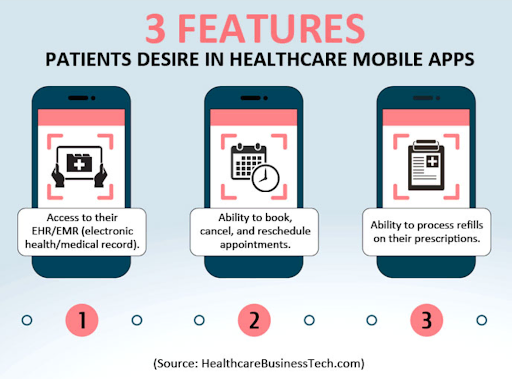
4. 19% of owners of a smartphone have at least one health app on their phone. The most popular types are weight, diet, and exercise apps (Demi & Cooper Advertising and DC Interactive Group)
This figure points out the need for your healthcare digital marketing to look into possibly launching a health-related app for your organization focused on your specialty.
This shows that digital marketing strategy for healthcare should have a strong mobile focus no matter what the industry size is.
5. According to a recent study conducted by Mediabistro, 54% of patients are more comfortable with their providers seeking advice from online communities to better treat their problems.
This shows that a lot of people are comfortable in perceiving the Internet to be beneficial for the exchange of relevant information even about their health.
6. According to MedTechMedia, 31% of healthcare professionals use social media for professional networking.
This shows the importance of social media and other applications which helps in professional development for healthcare workers from networks such as LinkedIn, Twitter, and Facebook.
This is undeniably an important factor of digital marketing for healthcare.
7. As per Demi & Cooper Advertising and DC Interactive Group, 41% of people reported that social media would affect their choice of a specific medical facility, hospital, or doctor.
This statistic illustrates that social media can drive both negative and positive word of mouth.
This makes it an important channel for organizations and individuals in the healthcare industry to focus on in order to attract as well as retain patients.
8. About 60% of doctors say social media improves the quality of care delivered to patients.
This shows that many doctors believe that the authenticity and transparency that social media helps spur are actually improving the quality of care provided by them their patients.
9. Google’s Think Insights has shown a 119% year-over-year increase in YouTube traffic to hospital sites.
This shows that video marketing could work better than other forms of content to convert traffic and leads with more efficiency.
The hospital facilities should look to create video content based on patient stories, interviews, and others.
Trends in Healthcare Industry to Watch for in 2023
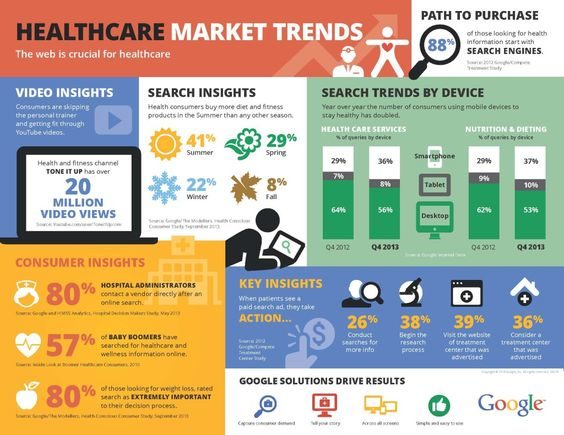
There has been a visible transformation in the healthcare industry that creates both opportunities and challenges for marketers.
There are two variables that drive this transition.
One is the rise of the digitally empowered healthcare consumer and the other is the shift from fee-for-service payment to a healthcare delivery model on the basis of patient satisfaction, quality outcomes, and transparency.
It affects both the ‘who’ and ‘how’ of marketing strategies in the medical industry.
Therefore, there has been a transformation in the role of physicians as decision-makers.
There are five key trends that should be considered by every healthcare digital marketer:
1. Consumers are now avid researchers
Today, consumers are no longer satisfied with blindly accepting what a doctor tells them.
They prefer doing homework before visiting a doctor. This means the doctor no longer has the only say on medications, hospitals, treatment, and more.
Healthcare is more like the collaboration between doctors and consumers, thus catering to the needs of digital marketing for hospitals.
2. Healthcare marketers to target payers and consumers
For healthcare marketers, there are different audiences.
This segment is the primary ‘who’ on the basis of the product or service being offered.
Not so surprisingly, doctors are the primary marketing target. And why not? They still recommend, prescribe, advocate, and buy products and services.
However, doctor decision-making is gradually shrinking as decision-making shifts to healthcare consumers and payers. Therefore, the emerging trend is that healthcare marketers need to increasingly target payers and consumers.
3. Digital channels overshadowing traditional marketing
While digital marketing is infusing in almost every sector, the healthcare industry is one of them.
The last couple of years has seen a huge jump in the preference for digital marketing over traditional marketing in healthcare.
According to an MM&M study, the greatest growth for the biotech, medical, diagnostics, and pharmaceutical device marketing budgets is taking place in digital sales material, mobile apps, and social media.
Since consumer marketing tricks are shifting greatly to digital ads, social media, and mobile apps, therefore, the shift to digital channels in the healthcare industry is no wonder.
4. Some insights by Think with Google’s ‘The Digital Journey to Wellness: Hospital Selection
- Search engines are used by 77% of patients before booking appointments.
- Search drives nearly 3 times as many visitors to hospital sites as compared to the number of visitors from another affiliate/referral sites.
- 44% of patients schedule an appointment who research hospitals on a mobile device.
- The decision process is empowered by digital content.
Before booking an appointment –
- 77% of patients use search.
- 26% used reviews generated by consumers.
- 50% used health information sites.
- 54% of the patients used health insurance company sites.
- 83% used hospital sites.
5. Growth rate of the Indian Healthcare Industry
As per the Indian Brand Equity Foundation, The Indian hospital industry accounting for 80% of the total healthcare market is expected to touch US$ 132 billion by 2023.
This is due to the increase in the adoption of digital techniques. Seeing these growth trends in India, Google Health card offers health services in India
Also, the Healthcare Information Technology (IT) market which is currently valued at US $1 billion will grow 1.5 times more by 2023.
Healthcare Budget in 2022
Here is how digital marketing has affected healthcare marketing budgets in 2022:
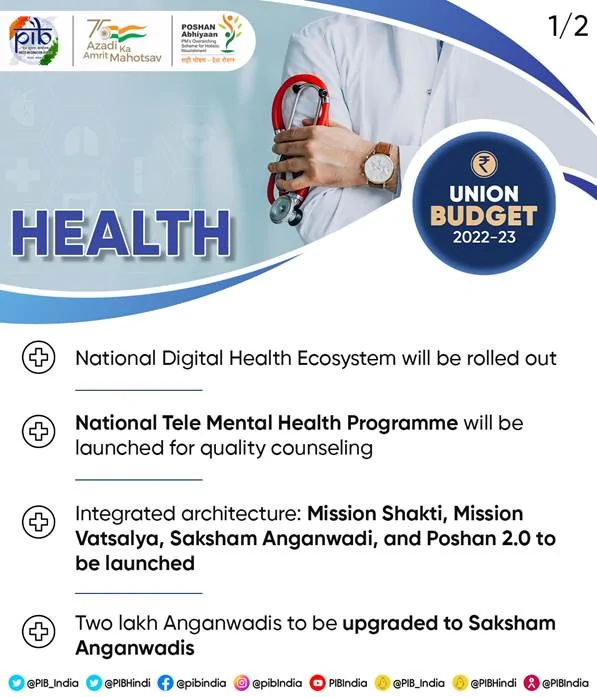
Image Source
Case Studies
Let’s understand digital marketing in healthcare better with the following case studies…
Case Study 1: Lybrate App is India’s Number 1 Medical App By Leveraging Mobile
That said, let us understand the working of digital marketing and the health sector with a case study on Lybrate, India’s first medical app.
 In a survey conducted by Lybrate, it was found that 52 percent of the Indians who are involved in self-medication have exposed themselves to dire health risks.
With the objective to cut down self-medication prevalence, the Lybrate app was started by former professionals, Saurabh Arora (Facebook) and Rahul Narang (Snapdeal).
Lybrate has more than 80,000 doctors from multiple specialties which enables them to address the queries of the patients for free or get in touch with a patient privately on payment of a professional fee.
Looking at possible acquisitions for growth opportunities, Lybrate is the number 1 medical app in India.
Before the digitization of the healthcare industry, people used to visit a doctor when they were really sick.
Well, even now, we Indians have a tendency to seek doctors only when our homemade tricks don’t work.
Seeing these trends, Faridabad-based startup, Lybrate, came up with a motive to reduce the communication gap between doctors and patients.
This is encouraging people to seek the opinion of a doctor for staying healthy and fit.
One of the features introduced by Lybrate is the Health Feed. One can get tips related to health which encourages the user to live healthy and fit. Also, it promotes the cautious side of medicine.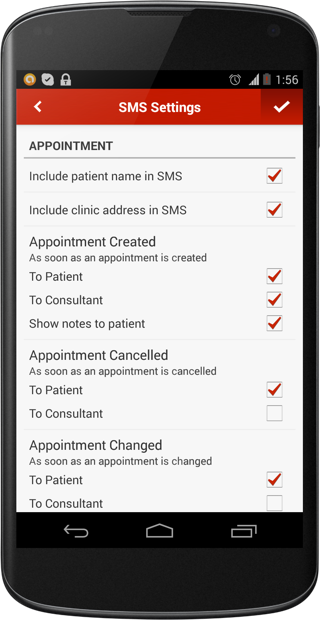
Lybrate’s business model unlike other platforms in the mHealth space is personalized according to the needs of the Indian audience.
Being the first mobile healthcare information, delivery, and access platform, Lybrate is fixing the root cause problem of the healthcare industry in India i.e. accessibility of doctors and the communication gap between doctors and patients.
This medical app has planned a lot for transforming the future of the healthcare industry in India.
You can read the full case study on Lybrate here.
Case Study 2: How I-Am Care leveraged inbound marketing to increase its lead generation by 6 times
After the Swiss company, I-Am Care integrated inbound marketing into its marketing strategy, its total leads from visitors increased by 347%. Learn the detailed case study of I-Am Care’s success.
Experts in the field of ‘Digitized Healthcare Industry
Marie Ennis-O’Connor

- Twitter Handle: @JBBC, Website: hcsmonitor.com
Marie is a social media consultant and health blogger. You will find her tweets majorly focused on trends in healthcare marketing and the useful tools you could leverage.
Reed Smith

- Twitter handle: @reedsmith, Website: ardenhealth.com
Reed is one of the best technology-focused health bloggers on Twitter providing creative and consistent content that focuses on social technology and healthcare.
Stewart Gandolf
- Twitter handle: @stewartgandolf, Website: healthcaresuccess.com
If you wish to learn about health marketing, his website is one to look up to. Oh, his Twitter feed is even better. All thanks to #hcmktg stories from around the web.
Dan Dunlop
- Twitter handle: @dandunlop, Website: thehealthcaremarketer.wordpress.com
Being a healthcare marketing expert, Dan also publishes a Twitter newsletter namely the Dan Dunlop Daily that makes up some of the best articles on health marketing across the web.
Medical Web Experts
- Twitter handle: @MedWebExperts, Website: medicalwebexperts.com
With a focus on digital and mobile marketing, Medical Web Experts help with marketing the patient portal or start off with a helpful blog.
Jonathan Catley

- Twitter handle: @jonathancatley, Website: MDConnectInc.com
Being an expert on connecting with patients through the web, Jonathan talks about marketing tactics, the power of SEO, direct communication, etc, largely centered on the healthcare industry.
Healthcare Magnet
- Twitter handle: @HCmagnet
This is a company that sells physical marketing materials along with talking about marketing strategies focusing on open communication and accessibility.
Fergus Linskey

- Twitter handle: @FergusLinskey, Website: LevoHealth.com
The tweets by Linskey are targeted at practices and individual doctors with an emphasis on the doctors of different, complementary social media practices.
Forum for Healthcare Strategists
- Twitter handle: @HCStrategists
If you are interested in healthcare marketing content along with articles by experts, Healthcare Strategies is one to follow.
Join Free Live Orientation Session
Events and Conferences of the Healthcare Industry:
1. North England Society for Healthcare Communications (NESHCo) Spring Conference
NESHCo, a professional society for those in public affairs, advertising, marketing, public relations, and healthcare communications, comes up with a conference in a different location and for a different theme every year.
2. Digital Marketing in Healthcare Summit
This summit was hosted by Innovation Enterprise and had guest speakers that provide advice on various topics like digital, innovation, strategy, analytics, operations, and more. The topics for the digital marketing in healthcare summit included digital marketing in health, building an online presence, social engagement, and wearable.
3. Healthcare Marketing and Physician Strategies Summit
Hosted by the Healthcare Strategy Institute, this conference was designed for health executives in communication, advertising, public relations, marketing, and other executives involved in marketing strategy.
The aim of the summit was to help healthcare marketers develop strategies in order to address emerging and new challenges via case studies of leading hands-on workshops, keynote speakers, and healthcare organizations.
4. Health IT Marketing & PR Conference (HITMC)
With a focus on PR and marketing in healthcare, including content marketing, search engine optimization (SEO), blogging, event public relations, lead generation, healthcare advertising, and social media marketing.
Attendees include health IT executives focused on marketing, digital marketers in health IT, and PR professionals and marketing managers at health IT companies. Speakers include marketing and PR experts from outside of the healthcare space, and health IT marketing and PR experts.
5. Carolinas Healthcare Public Relations & Marketing Society (CHPRMS) Fall Conference
CHPRMS provides resources for healthcare organizations’ members in South and North Carolina. At the organization’s annual fall conference, healthcare marketers and communicators can learn about the dynamic world of healthcare marketing and get to know the experience of leading experts. You will attend presentations from healthcare marketing experts at the conference.
6. Modern Healthcare’s Strategic Marketing Conference: Ahead of the Curve
The aim of this conference is to bring together thought leaders, hospital executives, marketing, and communications professionals, to share knowledge on communications and marketing strategies. Topics covered include content marketing, social media, developing an effective digital strategy, safeguarding your brand, building reputation and trust, and using data in strategic marketing.
7. Healthcare Internet Conference
Hosted by Greystone, a web strategy, and digital marketing consulting firm, this conference is designed for health plans, integrated networks, group practices, health systems, and healthcare executives from hospitals.
Attendees include healthcare professionals, chief information officers, public relations directors, marketing directors, and web directors. You will learn about the latest developments in technology, and practices to accomplish marketing goals.
8. Mid-Atlantic Society for Healthcare Strategy and Market Development (MASHSMD) Fall Conference
MASHSMD members include service providers, healthcare consultants, physician groups, insurers, and healthcare systems and hospitals. Held twice a year, each conference comes with a new theme. The theme of their conference was ‘Taking the Fear Out of Healthcare Marketing. Topics included how to stand out in a highly competitive market, healthcare branding, and media training tips.
9. Medical Group Management Association (MGMA) Annual Conference
An organization for medical practice administrators and executives, MGMA aims to help practice leaders move their practices forward by helping them find the services and products they need to reduce operating costs and give a better patient experience.
Digital Health Summit
Happening in Mumbai, the healthcare IT Summit is the premier expo and conference for exploring what is new in mHealth, eHealth, IT implementation, and Telehealth in Government hospitals and organizations.

Top Healthcare Marketing Agencies and Companies
1. Omnicore – Digital Marketing Agency
It is a healthcare marketing and advertising agency where that helps medical practices and organizations find their customers via digital and social media and generate more business online.
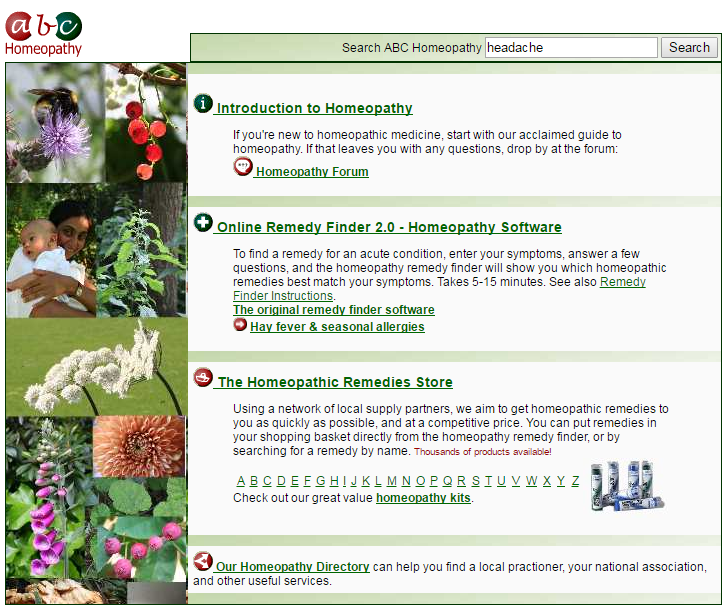
2. ABC Homeopathy
Another company that helps in finding the best possible medicine depends upon the symptoms you type in the search bar. It is one of the most leveraged healthcare companies in the digital field.
3. Pulse Digital Marketing
With an aim to bring ‘pulse’ to the healthcare and medical brands via digital as well as inbound marketing, Pulse Digital Marketing helps them better connect with the customers in this digitized world.
Take your business where patients are i.e. Online. The video below will explain the need for digital marketing in the healthcare industry in a comprehensive manner.
Watch this video on “Digital Marketing for Health Care Industry”
If you are in the healthcare sector but don’t know the what and why of Digital Marketing, then you might not survive in the market for long.
There is a pool of opportunities waiting for you. Get started with a digital marketing course to leverage revolutionary marketing techniques in the health sector.
Download Detailed Brochure and Get Complimentary access to Live Online Demo Class with Industry Expert.
FAQ:
1. How digital marketing helps in the healthcare industry?
Digital Marketing provides greater exposure to a larger audience, building a brand by retaining these people and attracting new patients or audiences.
2. How does digital marketing work in hospitals?
Digital marketing allows Health specialists to promote their expertise to prospective patients, build professional territory, and boost their healthcare reputation.
3. What is the digital strategy in healthcare?
Healthcare digital transformation is an organized program of Industry upgrades to pharma/medical care plans of action, people, methods, and innovations to incorporate digital marketing into a business to ensure the growth and profits of a given Industry.
4. How to promote hospitals in digital marketing?
Some of the best digital practices are as mentioned below:
- Utilize reliable medical care branding.
- Consider the online patient experience.
- Construct a responsive medical care site.
- Test site speeds.
- SEO tool results for future medical care customers.
- Use PPC and display ads for medical care promotion.
- Influence online entertainment (the correct way)
5. Why healthcare industry needs digital transformation?
The principal objective of digital transformation in the medical care market is to carry out innovative medical care resolutions that streamline significant work process cycles and compliances and oversee patient wellbeing while at the same time reducing costs.
Image Credits: www.mdgadvertising.com, www.pinimg.com, www.healthcarestrategy.com, www.twitter.com, Xpedient Digital & www.mamsys.com.